
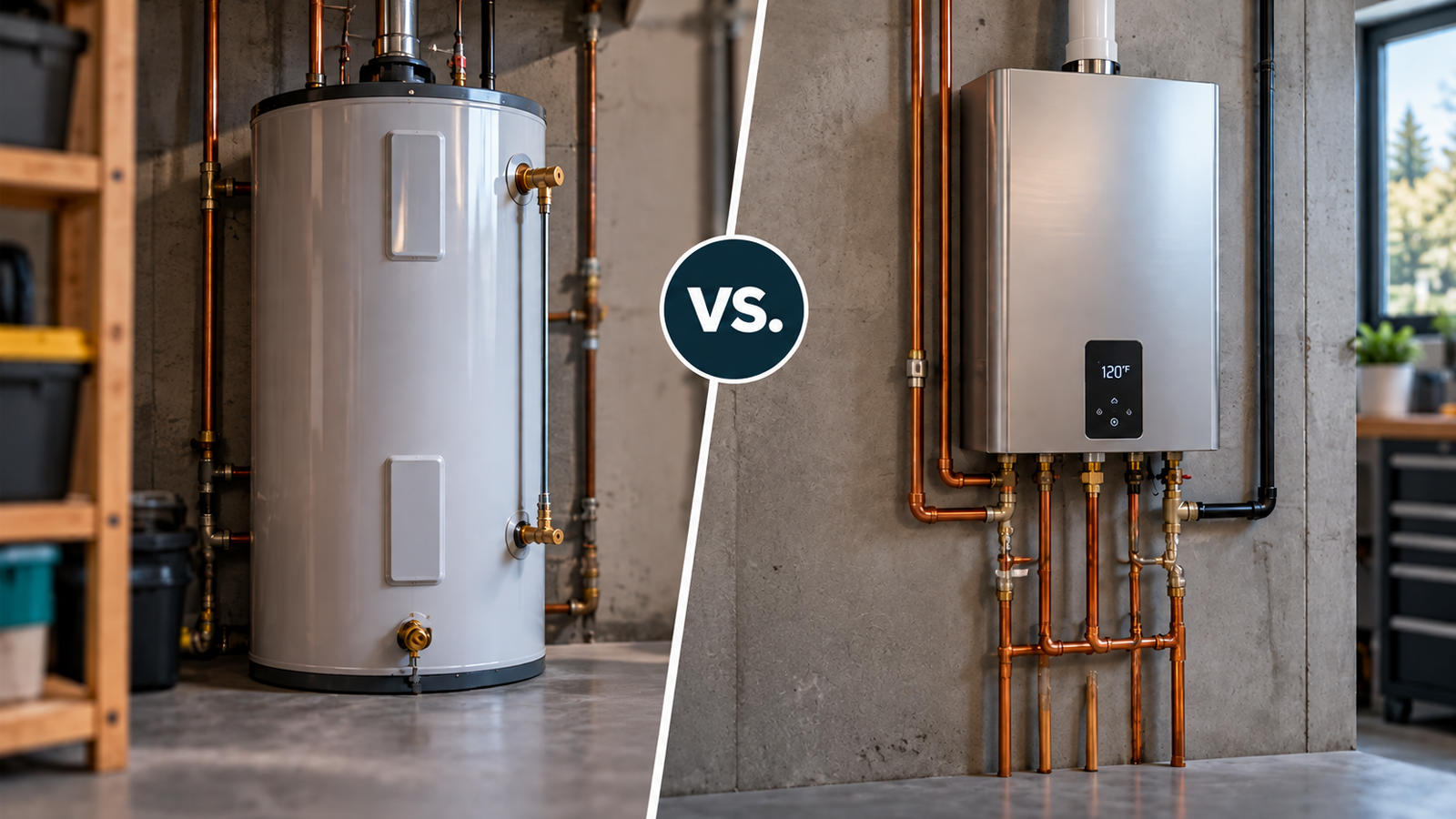
When it’s time to replace your water heater, you have more options than you might realize. You can stick with a traditional hot water tank or make the switch to a tankless system that heats water as you need it.
So, which one makes more sense?
The hot water tank versus tankless water heater decision depends on your home, your family, how much hot water you use, and what matters most to you. There isn’t one system that is automatically better for every household.
At Neufeld Heating, we’ve been helping Fraser Valley families keep their homes comfortable for generations. We believe the best choice is the one that works well for your household, without paying for features or capacity you don’t really need.
Here’s what you should know before deciding.

How Does a Traditional Hot Water Tank Work?
A traditional hot water tank does exactly what the name suggests. It heats water and stores it in a tank until you need it.
Most homes have a tank sized to meet the household’s typical hot water needs. When you turn on the shower, run the dishwasher, or wash your hands, heated water leaves the tank. Cold water enters to replace it and is heated for later use.
It’s a simple system that homeowners have relied on for decades.
One of the biggest advantages is familiarity. Traditional tanks are common, straightforward to service, and usually less expensive to install than tankless systems. If you’re replacing an existing tank with a similar model, installation can also be fairly simple.
The trade-off is that the tank has a limited supply. If everyone showers back-to-back while the washing machine is running, you may eventually hear the dreaded words, “Who used all the hot water?”
How Does a Tankless Water Heater Work?
A tankless water heater, sometimes called an on-demand water heater, doesn’t keep a large supply of hot water waiting in a tank.
Instead, the unit heats water as it flows through the system. When you turn on a hot water tap, the heater gets to work. When you turn off the tap, it stops.
This design is one of the biggest differences when comparing a hot water tank versus tankless water heater.
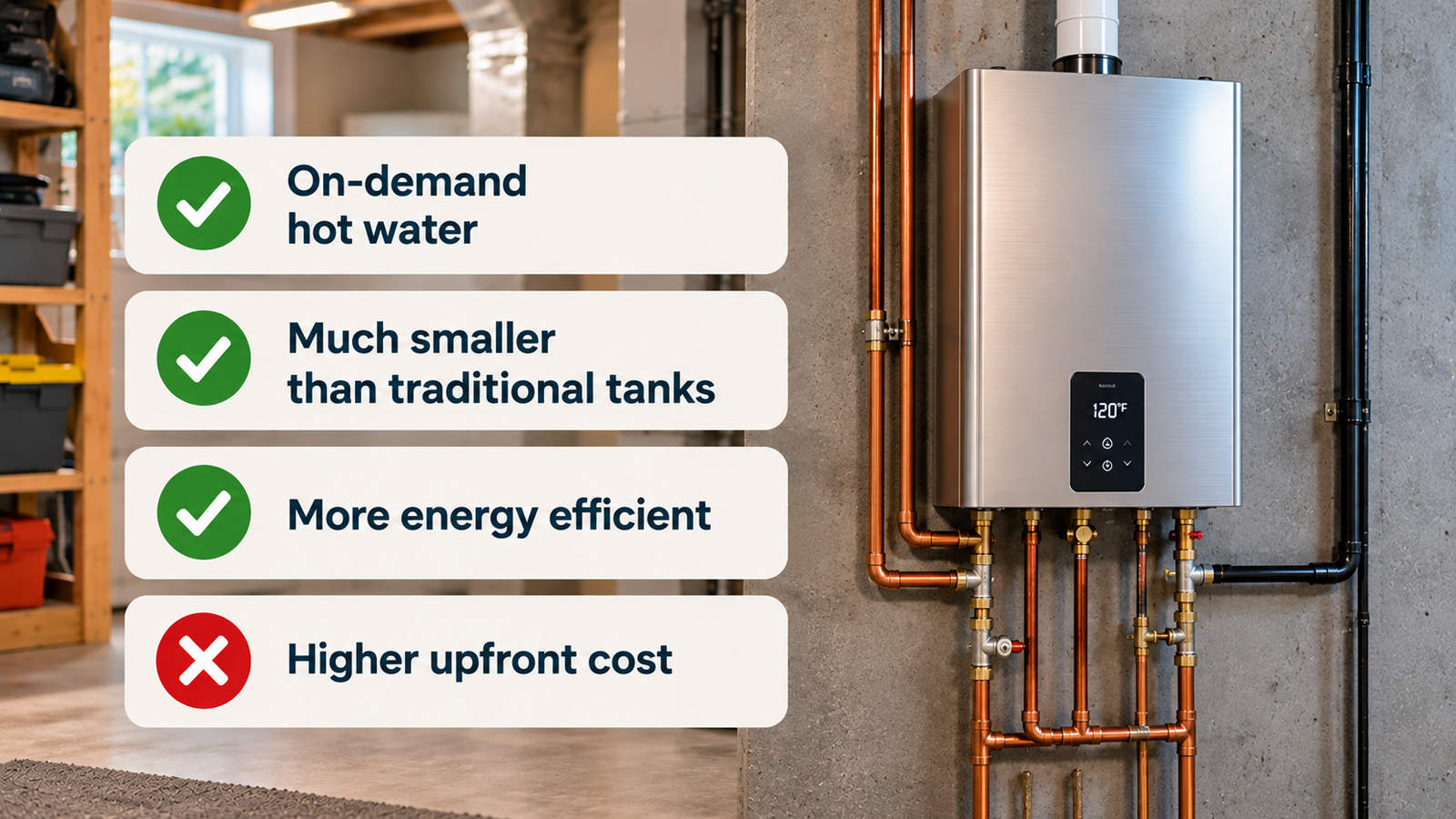
Because there’s no storage tank, you aren’t continually keeping a large volume of water hot. Tankless units are also much smaller than traditional tanks, which can be helpful when space is limited.
And because the system heats water on demand, you don’t run out of stored hot water in the same way you can with a tank.
That doesn’t mean the supply is unlimited in every situation, though. Every tankless unit has a maximum flow rate. If several people are using hot water at the same time, the system needs to be properly sized to keep up.
Which Gives You More Hot Water?
This is often the first question families ask when looking at a hot water tank versus tankless water heater.
A traditional tank gives you a set amount of heated water. Once that supply is used, the system needs time to heat the incoming cold water. A properly sized tank should comfortably handle normal daily use, but unusually high demand can empty it.
A tankless system works differently. As long as the unit can keep up with the amount of water flowing through it, it can continue heating water without waiting for a tank to refill.
That can be especially appealing for larger families or households where showers, laundry, and dishes often happen around the same time.
However, bigger isn’t always better. Proper sizing matters with both systems. Choosing the right capacity for the way your household actually uses hot water is more important than choosing one technology over another.
What About Energy Use?
Energy efficiency is another important part of the hot water tank versus tankless water heater conversation.
Traditional tanks maintain a supply of heated water, even when nobody is using it. Modern tanks are much better insulated than older models, but some energy is still used to keep that stored water hot.
Tankless systems avoid much of this standby heat loss because they only heat water when it is needed.
That can reduce energy use, but your actual savings will depend on your household. The amount of hot water you use, your fuel source, the efficiency of the equipment, and your family’s habits all make a difference.
A tankless system may lower energy use, but that doesn’t automatically mean it will be the least expensive option overall. Installation cost and maintenance should also be part of the calculation.
How Much Space Do You Have?
This one is pretty easy.
A traditional water heater needs room for the tank. Depending on its size, it can take up a noticeable amount of floor space in a utility room, basement, or mechanical room.
Tankless systems are compact and usually mounted on a wall. That can free up valuable space, especially in smaller homes.
If your current tank is tucked away where it isn’t bothering anyone, space may not matter much. If you’re renovating or trying to make better use of a cramped mechanical room, tankless water heater installation may be worth considering.
Which System Requires More Maintenance?
Both systems need maintenance if you want them to operate reliably and last as long as possible.
Traditional hot water tanks should be inspected regularly. Sediment can collect inside the tank over time, and components such as the anode rod may need attention. Keeping an eye on the condition of an older tank is also important because corrosion can eventually lead to leaks.
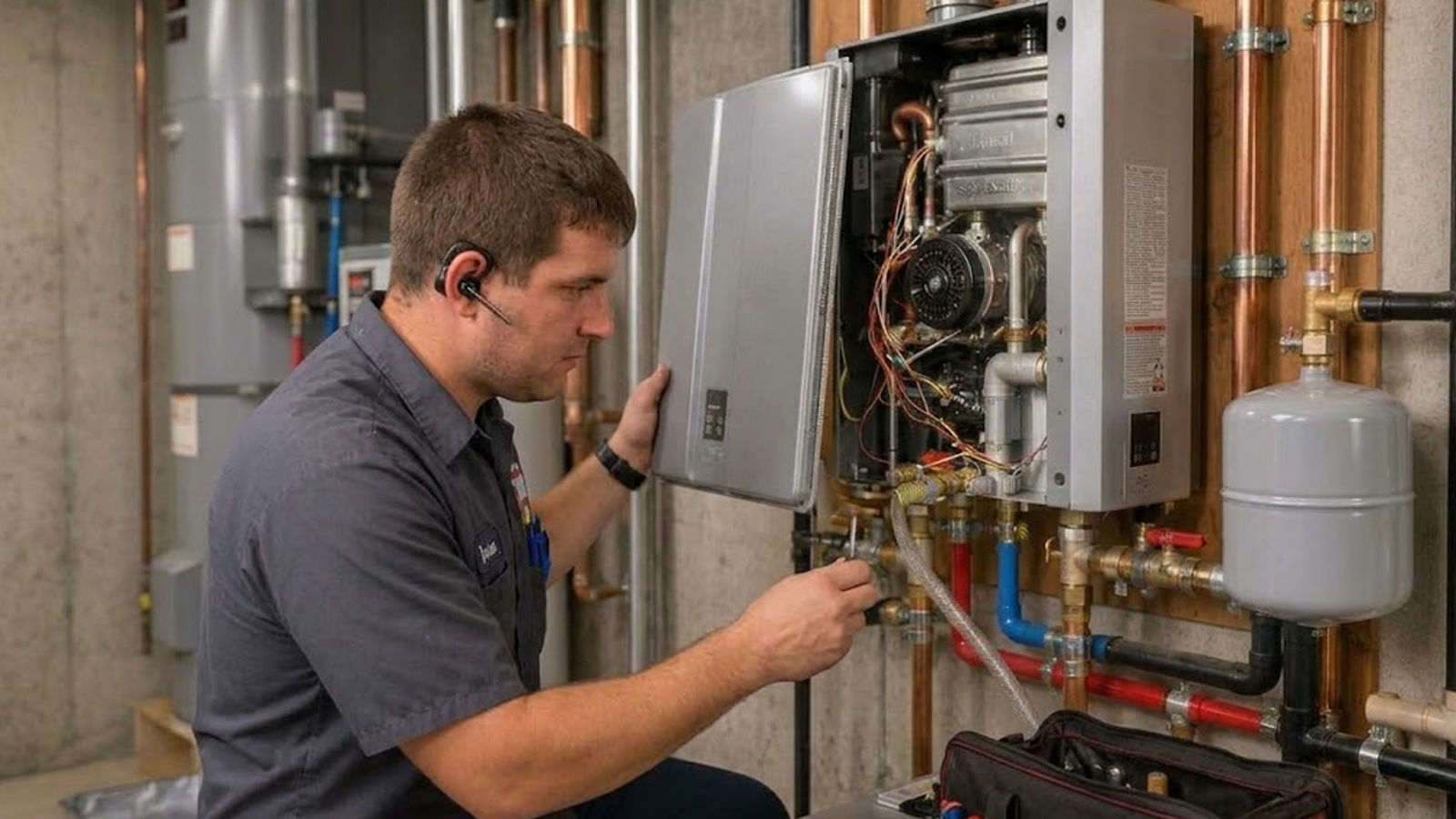
Tankless systems need routine care, too. Mineral buildup can develop inside the heat exchanger, particularly in areas with harder water. Periodic flushing and professional maintenance can help keep the system working efficiently.
When comparing a hot water tank versus tankless water heater, don’t assume that “tankless” means “maintenance-free.” It doesn’t. Both options benefit from regular professional attention.
What About Upfront Cost?
For many homeowners, this is where the decision becomes more practical.
Replacing a traditional tank with another similar tank is generally the more affordable option upfront. If the existing connections and venting are suitable for the replacement equipment, the job may also require fewer changes.
A tankless conversion can be a bigger project.
Depending on your home and the unit being installed, changes may be needed to gas lines, venting, electrical connections, or other parts of the system. That can increase the initial cost of tankless water heater installation.
The higher upfront price may make sense if you plan to stay in the home for years and value the space savings, energy efficiency, and on-demand hot water. For another household, a reliable traditional tank may make much more financial sense.
How Long Do Water Heaters Last?
Lifespan is another factor worth considering when planning a water heater replacement in Abbotsford.
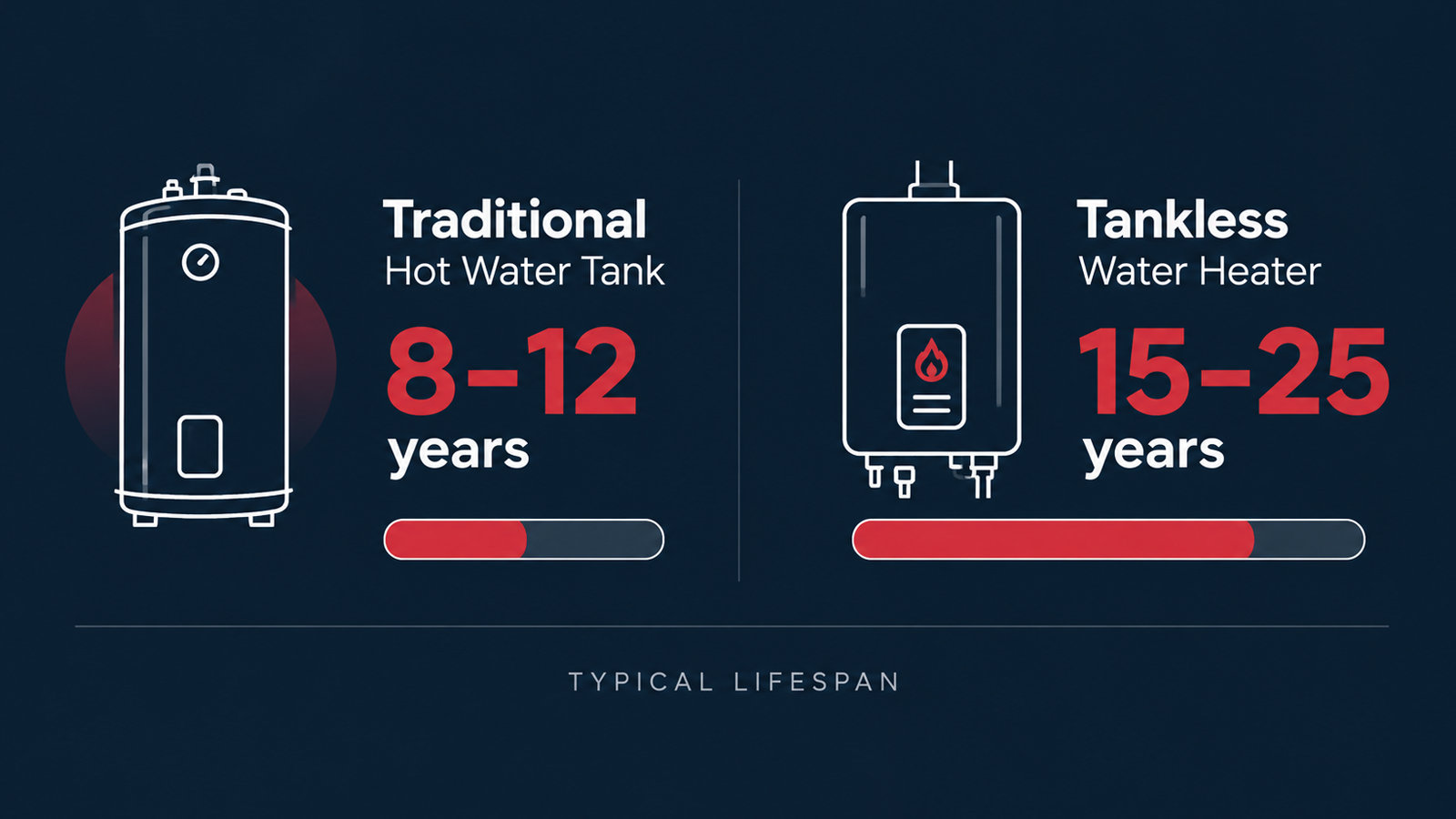
Tankless water heaters can often have a longer service life than traditional tanks when they are properly installed and maintained. Traditional tanks still offer many years of reliable service, but eventually the tank itself can corrode and require replacement.
Of course, no water heater comes with an exact expiry date. Water quality, usage, installation, maintenance, and equipment quality all affect how long a system lasts.
If your existing water heater is getting older, having it inspected can give you a better idea of its condition before you suddenly find yourself without hot water.
Which Water Heater Is Better for Your Family?
The best way to approach the hot water tank versus tankless water heater decision is to think about your household rather than the equipment first.
How many people live in your home? Do several people shower around the same time? Do you frequently run the dishwasher and washing machine while someone is showering? Are you planning to stay in the home long-term? Is space tight? And how much do you want to spend upfront?
A traditional hot water tank can be an excellent choice for families who want a dependable, familiar system with a lower initial cost.
An on-demand water heater may be a better fit for households that want greater efficiency, more usable space, and a system that can provide a continuous supply of hot water when properly sized.
Neither answer is wrong.
The important part is making sure the system is sized and installed for your home. That’s where professional advice can save you from paying too much for something you don’t need or ending up with a system that can’t comfortably keep up.
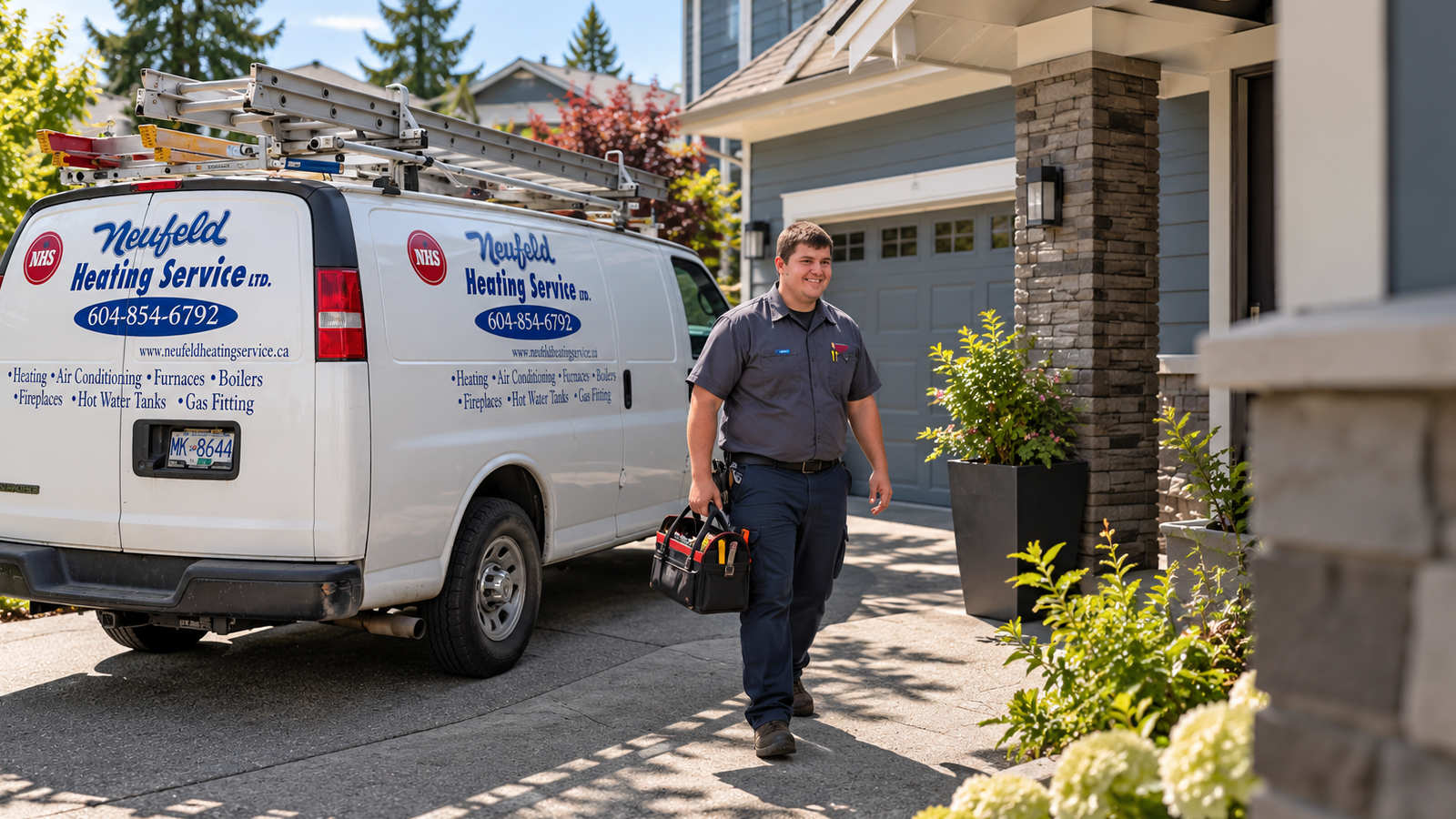
Let’s Find the Right Water Heater for Your Home
If your current water heater is getting older or you’re tired of running out of hot water, Neufeld Heating can help you compare your options.
We provide water heater replacement in Abbotsford and Aldergrove and can help you decide whether a traditional tank or tankless system makes the most sense for your home, family, and budget. We’ll explain your options clearly, answer your questions, and help you choose a system you can depend on for years to come.
Contact Neufeld Heating today to talk about your water heater replacement or tankless water heater installation.